Shoulder Pain Treatment in Barnsley
At Function First, our Barnsley physiotherapists focus on finding what is actually driving your shoulder pain, then giving you a clear plan to settle it and keep it settled.
Whether your pain came on suddenly after a fall or a heavy lift, or crept in gradually over several weeks, treatment starts with understanding the cause rather than chasing the symptom.
Condition
What Causes Shoulder Pain?
Shoulder pain rarely has a single cause. The joint relies on a group of muscles and tendons known as the rotator cuff, the muscles around the shoulder blade, and the joint capsule all working together. When one part is overloaded, weak or irritated, pain often follows. The causes we see most often in clinic include:
- Rotator cuff problems, from tendon irritation (tendinopathy) through to partial tears
- Shoulder impingement, where tendons are compressed during overhead movement
- Frozen shoulder (adhesive capsulitis), where the joint becomes stiff and painful
- Shoulder instability, often after a dislocation or in people with very mobile joints
- Arthritis and age related changes in the joint
- Referred pain from the neck, which can mimic a shoulder problem
Because the neck and shoulder are so closely linked, part of our assessment is working out whether your symptoms are coming from the shoulder itself or from your neck.
More Info
Common Shoulder Pain Symptoms
People come to us with a wide range of symptoms, and yours may include:
- Pain reaching overhead, behind the back or out to the side
- A painful arc of movement partway through lifting the arm
- Aching at night, particularly when lying on the affected side
- Weakness, or a feeling that the arm might give way
- Stiffness that limits how far the shoulder will move
- Clicking or catching sensations
When to seek urgent help: if your pain followed a significant injury, you cannot move the arm at all, the shoulder looks out of shape, or you notice numbness or pins and needles, see a healthcare professional promptly, as these can point to a problem that needs urgent assessment.
Rotator cuff, impingement and frozen shoulder
The rotator cuff is a group of four muscles that stabilise the shoulder and control fine movement. Rotator cuff pain is one of the most common shoulder complaints we treat, and the encouraging news is that most cases respond well to structured physiotherapy without the need for surgery. Impingement tends to build with repeated overhead activity, while frozen shoulder follows a pattern of painful, stiff and easing stages that can take time but becomes far more manageable with the right guidance. Getting the diagnosis right matters, because each of these responds to a different balance of hands on treatment, movement and loading.
Physiotherapy for shoulder pain in Barnsley
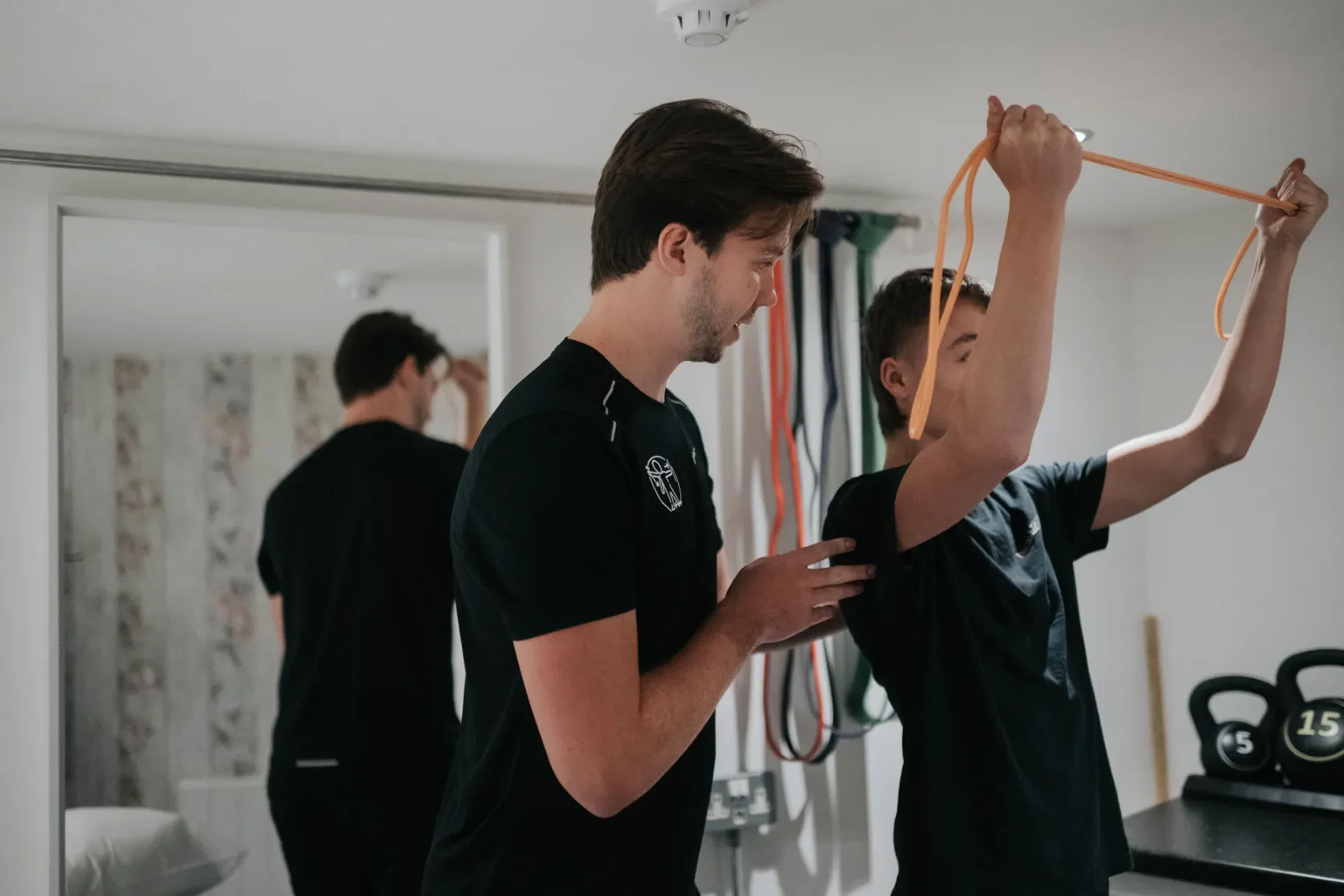
Treatment at Function First begins with a thorough assessment. We look at how your shoulder moves, how strong the surrounding muscles are, and how your neck and upper back contribute. From there we build a plan that usually combines hands on treatment to ease pain and restore movement with a progressive strengthening programme that rebuilds the rotator cuff and shoulder blade control.
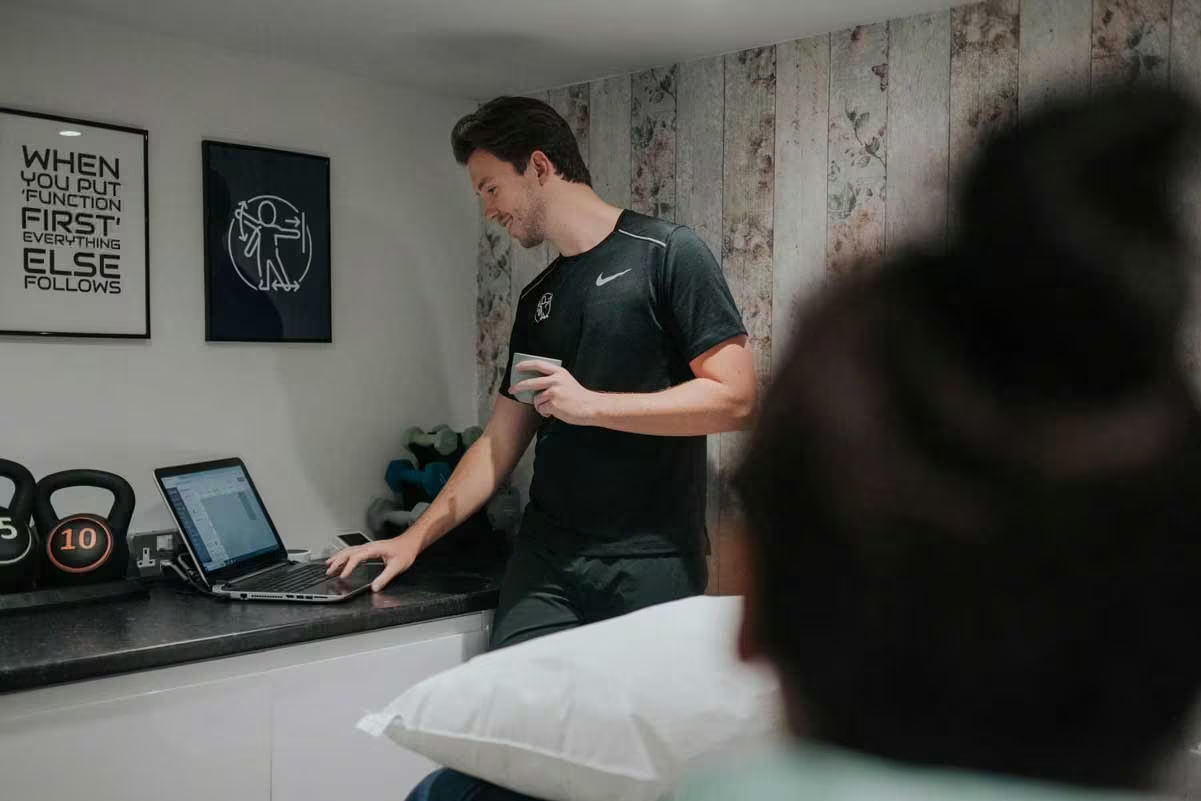
Our physiotherapy in Barnsley is delivered in Barnsley’s only purpose built physiotherapy gym, which lets us bridge the gap between easing your symptoms and building genuine, lasting strength. You are supported between sessions too, with regular check ins, our rehab app and direct support, so you are never left guessing.
Our physiotherapy in Barnsley is delivered in Barnsley’s only purpose built physiotherapy gym, which lets us bridge the gap between easing your symptoms and building genuine, lasting strength. You are supported between sessions too, with regular check ins, our rehab app and direct support, so you are never left guessing.
Sports massage for shoulder pain
For some people, tight and overworked muscles around the shoulder and upper back add to the problem. Sports massage can help reduce muscular tension and support your recovery alongside your rehabilitation plan. We will advise whether it is likely to help in your case rather than offering it as a default.
More Info
Why Choose Function First
- Barnsley's only purpose built physiotherapy gym
- An education first approach, so you understand your shoulder and how to look after it
- Regular check ins, a dedicated rehab app and support between sessions
- Chartered, HCPC registered physiotherapists
- A 5.0 rated clinic trusted across Barnsley
We do not stop when the pain eases. That is the point where we help you rebuild strength so the problem is less likely to return.
Team
Meet the team
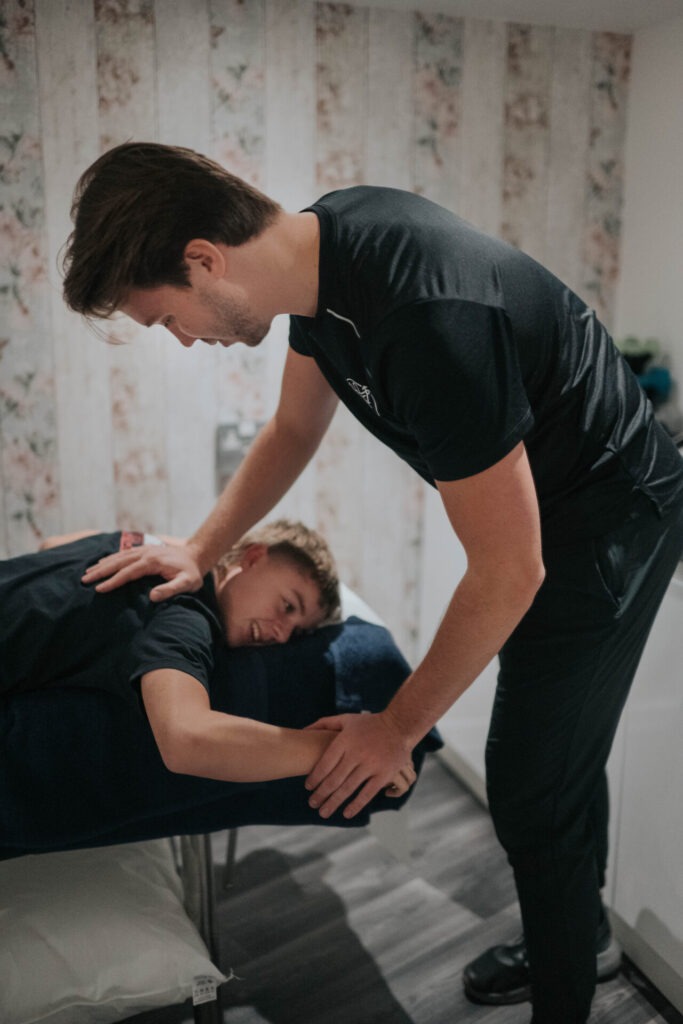
Your care is led by our team of chartered physiotherapists, including founder Thomas Harley-Blake (MCSP), who is registered with the Health and Care Professions Council (HCPC). You can read more about our physiotherapists and their experience.
Book shoulder pain treatment in Barnsley
If shoulder pain is stopping you lifting, reaching, training or sleeping, we can help. Book an appointment online or get in touch with the clinic and we will help you move better.
FAQ’s
Frequently asked questions
How long does shoulder pain take to heal?
It depends on the cause. Many soft tissue and rotator cuff problems improve within six to twelve weeks with the right rehabilitation, while a condition such as frozen shoulder can take longer. Your physiotherapist will give you a realistic timeframe after assessing you.
Should I rest or move a painful shoulder?
Complete rest is rarely the answer. Gentle, guided movement usually helps recovery, while the right amount of loading rebuilds strength. We will show you what is safe for your stage of recovery.
Do I need a scan for shoulder pain?
Most shoulder problems can be diagnosed through a clinical assessment and do not need a scan. Imaging is only useful in certain cases, and we will advise you if we think it is needed.
Can physiotherapy help a rotator cuff injury or frozen shoulder?
Yes. The majority of rotator cuff problems respond well to physiotherapy without surgery, and physiotherapy is a recognised treatment for frozen shoulder that can ease pain and restore movement through each stage.